 ← Back to RTHS
Stay in touch
← Back to RTHS
Stay in touch
What if you knew a few hours before?
Many people who get migraines say they can feel one building. Blood pressure appears to be part of what they are feeling. Following it through the day, rather than measuring it once and out of context, is something we can now do.
The measurement works. What we build on top of it is the part still taking shape. This page explains why blood pressure is the signal we follow.
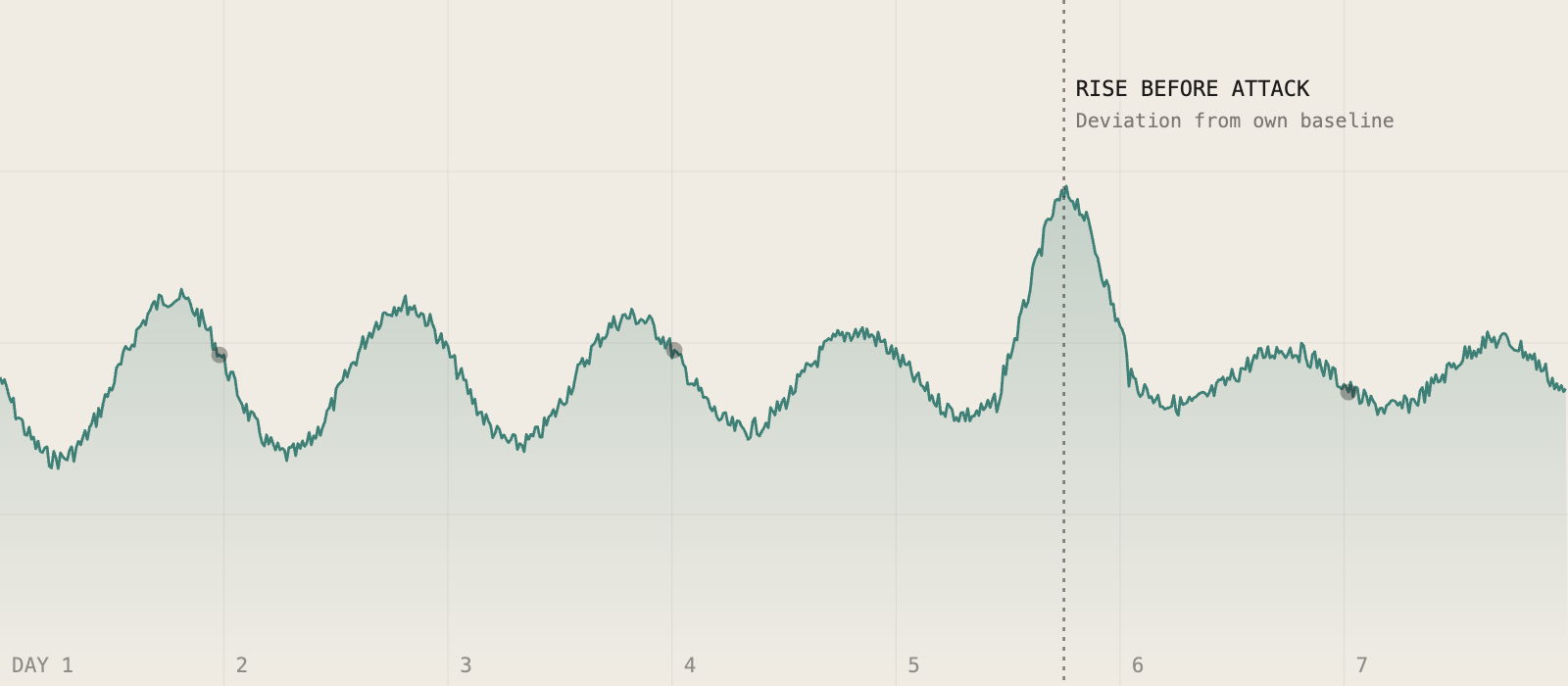
Nobody measures blood pressure when it matters most.
Migraine affects something like one in seven people. It is one of the most common reasons for lost working days in the world, and for most people the only real tool is to notice the warning signs and act early: take the medication, find a dark room, cancel the meeting.
The relationship between blood pressure and migraine has been discussed for decades, and it is still not settled. One reason is practical: blood pressure is measured in clinics, and migraines happen at work, on the bus, at two in the morning. Almost no one has a record of their blood pressure in the hours before an attack.
We can take that measurement outside the clinic now, and take it often. That is the gap closing.
Your own baseline, and what happens when you leave it.
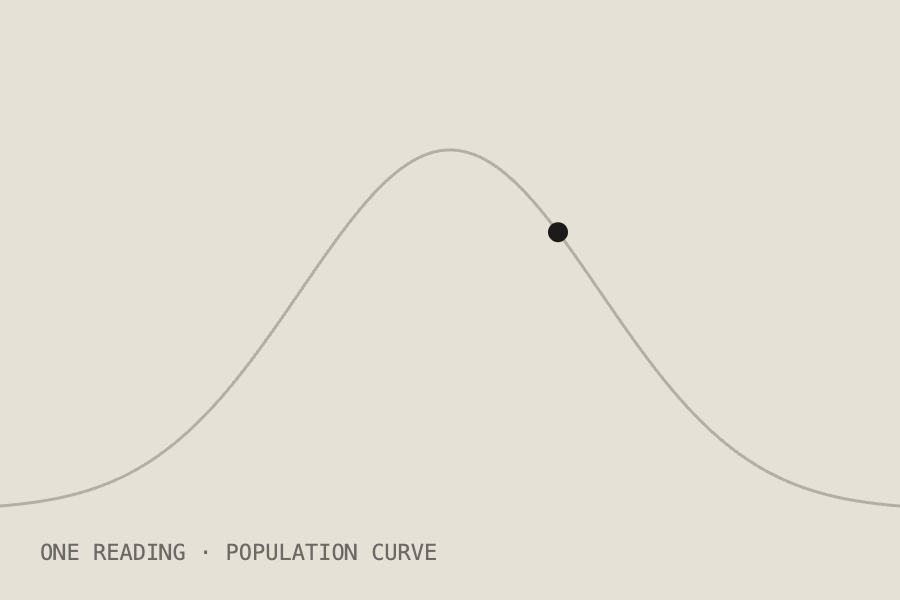
Everyone has their own normal.
120/80 is an average. Your usual might be higher or lower, and it moves through the day. A single reading can't tell you where you are relative to your own pattern.
Change shows up before the attack.
A shift in the hours before a migraine can only be caught by measuring during those hours, not at the GP a week later. Those are exactly the hours we can now cover.
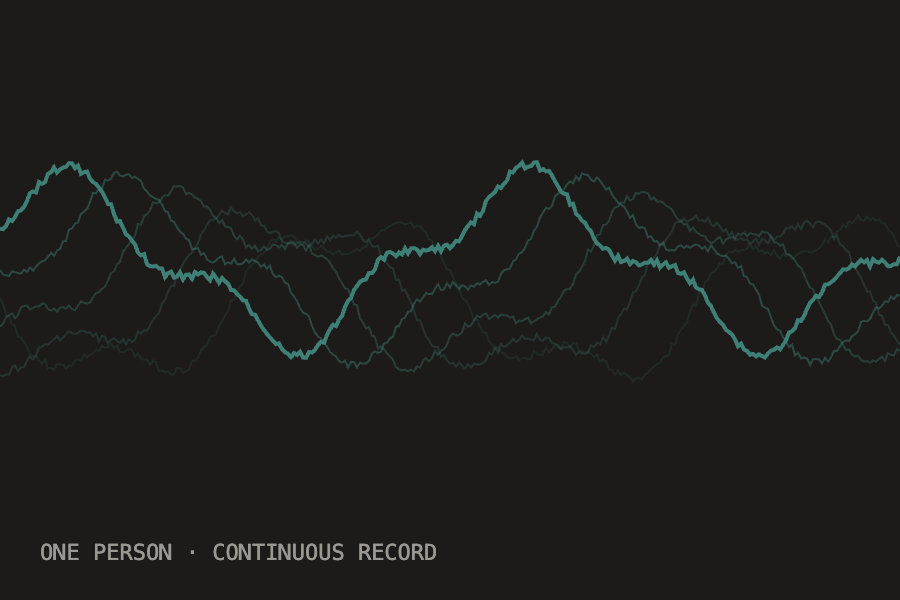
Patterns are personal.
Some people's attacks track blood pressure closely. Others do not. Following one person over weeks shows which is which, instead of averaging them away.
Things people ask us.
We can measure blood pressure continuously, outside a clinic, without a cuff. That is the hard part, and it works. What we turn it into for migraine specifically is the part we are building, and we would rather show you that than promise it.
The measurement technology is real and working. Approval for any specific medical use is a separate process with its own timetable, so we are not making medical claims here. Nothing on this page should replace advice from your doctor, or the treatment you are already on.
Yes, there does appear to be a connection. What is not settled is its shape: which moves first, and whether it holds for everyone or only for some people. That is exactly what following one person at a time, rather than averaging across thousands, is good at showing.
Because a single reading in a clinic says almost nothing about the hours around an attack. Migraines happen at work, on the bus, at two in the morning. Following blood pressure through the day is the only way to see what it does in those hours, and it is what our scanner is built to do.
You would, and the people working on this. We don't sell data and we don't share it with anyone outside that.
Do you get migraines?
If you get migraines, or you treat people who do, we would like to hear from you. Leave your details and we'll write when there is something to try.